

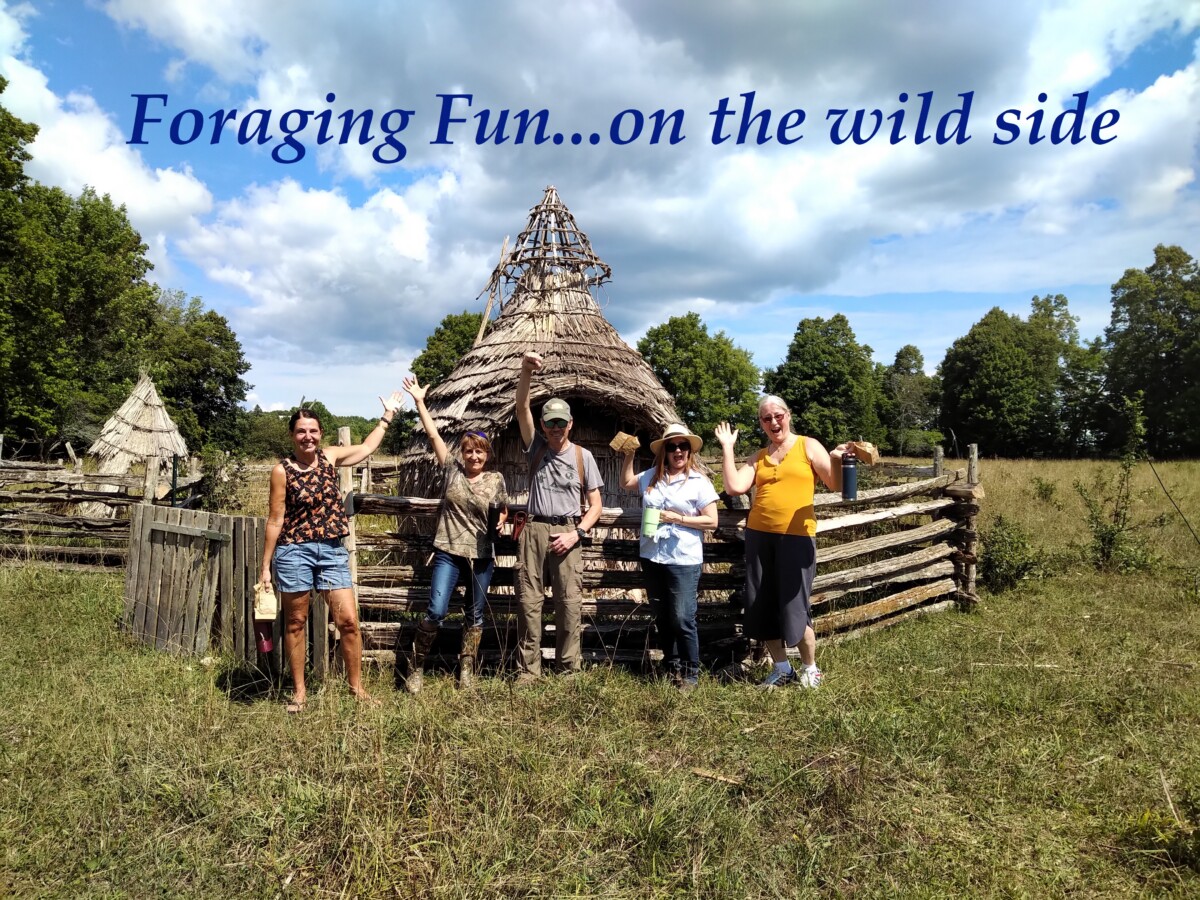
 For those that are into gardens, plants, and nature, ‘Foraging Fun’ may be the natural extension.
‘Foraging Fun’ was very much a part of Manitoulin Acres this past growing season (Canada May through September). I asked myself ‘what would I begin to teach on the property and be just as fun for me?’ Foraging rang loud and clear. Like my 18+ year walking club, being outdoors has ‘good for our health’ written all over it, no matter the weather.
For over a decade, foraging was in my life but I cannot tell you exactly when or what was the spark. Plants have been my thing since before age 14. I remember taking clippings of various people’s plants and putting them in Dixie cups with water on the ledge in the living room. My favourite house plant was the Spider plant and it quickly blossomed into asking my father if I could create a rock garden in the front yard. Two things that I remember most is the next door maple tree planting its seeds in my rock garden, and I let them grow. And apparently, one of my family threw pot seeds in the garden and I could not figure out what plant it was until someone recognized it (2 feet tall and growing).
All plants were allowed to grow. To wrap up the maple tree story…the largest maple tree sapling stayed in the rock garden while my father agreed to plant the other three along the driveway. Today, they are still there, big and colourful.
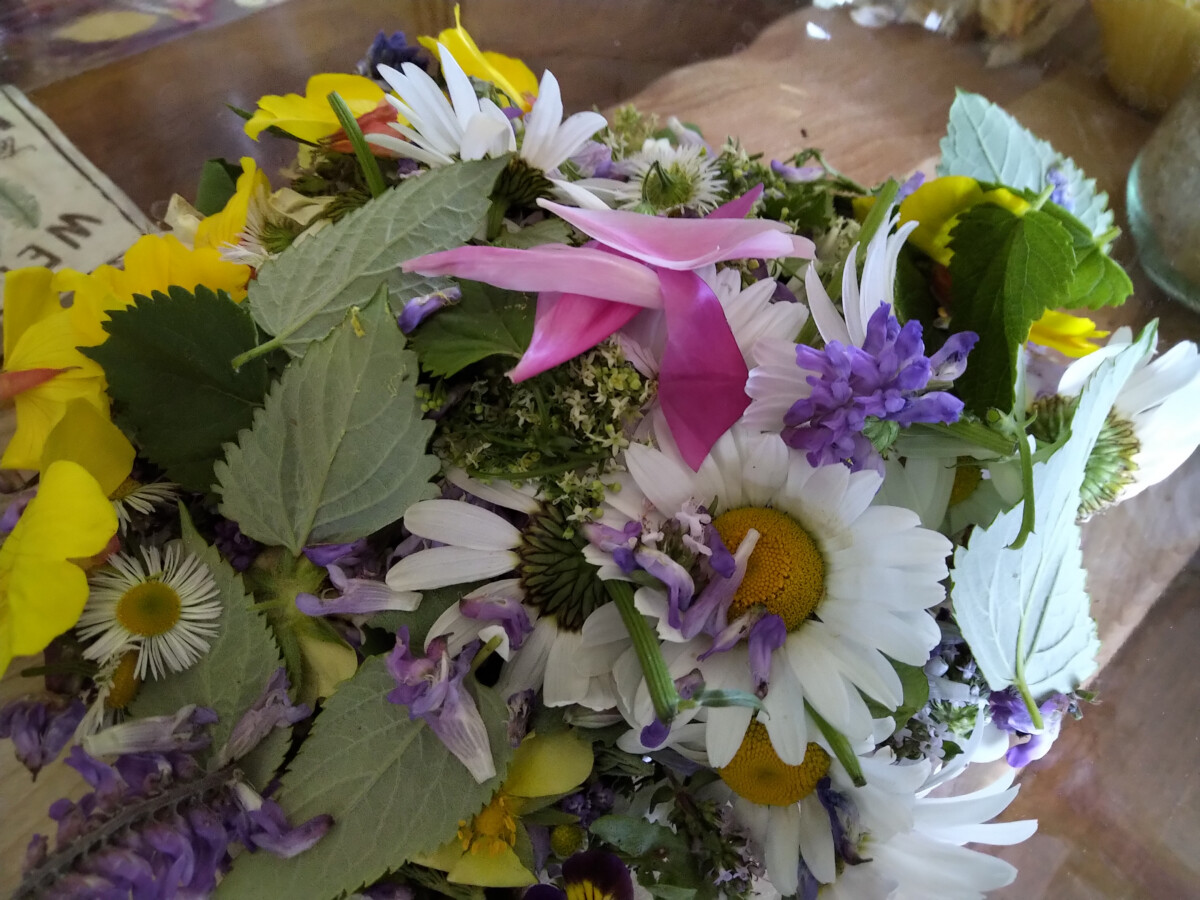
Foraged flower salad during one of the class.
Foraging Fun
Foraging is easy and means you get to eat what you forage. Foraging fun will be your unique journey in the great outdoors.
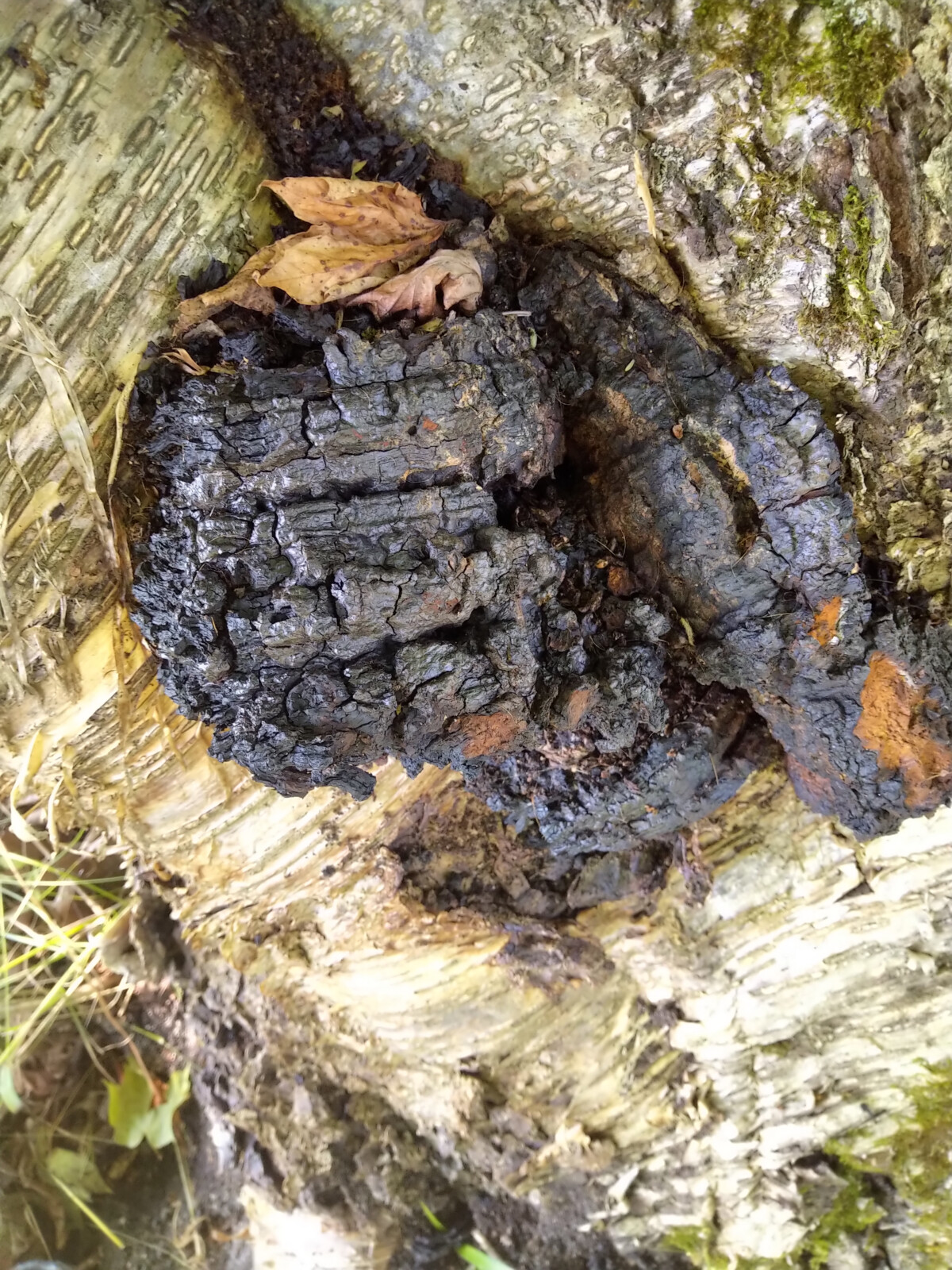
For me, it began in Toronto and the ravines near my home (Casa Loma area). Some of the first plants included dandelions, burdock, wild spinach, lemon sorrel, garlic mustard greens, wild celery, wild watercress, voilets. Then it morphed into some mushrooms (Chaga, Turkey Tail and Dryads), and herbals like wild lettuce.
“Did it begin with Lemon Sorrel aka yellow wood sorrel…the clover look-a-like plant with small yellow flowers. My daughter’s friend showed her and she showed me.”
Sharing with others is part of the fun if you are so inclined but you may make it solo. While participating in a garden community, I was able to teach the people what plants (aka weeds) were edible. Because the soil was loose, I was able to chow down on wild carrots. I had an interest in mushrooms too. When November came, I spied some Winter Shank mushrooms on a tree near the garden. Yummy and the only time I have found some.
For several years, I have been pointing out edibles to the Forest Hill Walk Club.
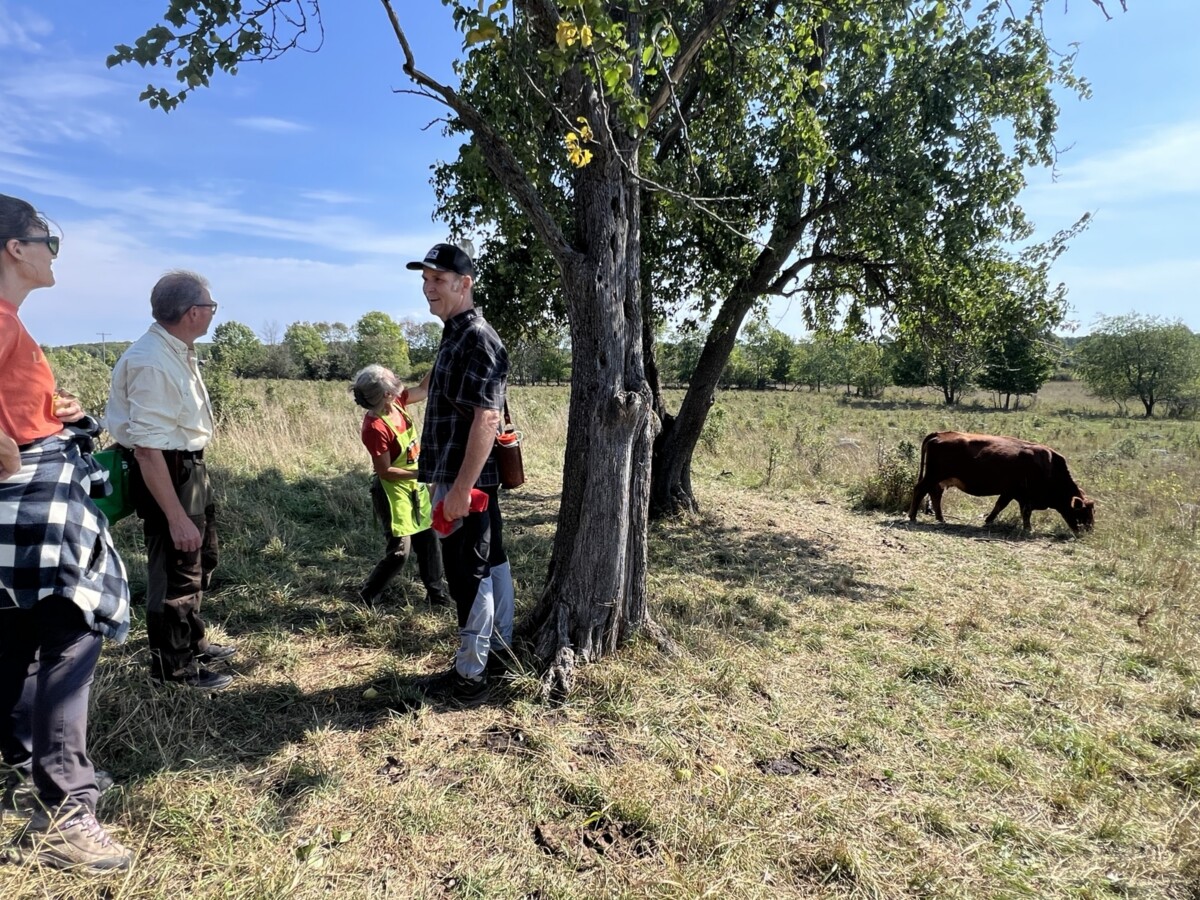
Foraging Fun class September 2026!
“Like a kid, what is that, what is this? Identify plants and learn if they are edible…your repertoire grows over time.”
While spending time at my dad’s home (2022 and 2023), I created a gathering of like minded souls, and foraging fun was something I brought to the table while others shared law for mankind, survival skills, or some just wanted to learn. The world began spinning in odd circles after 2020 which created an interest in being resourceful, living off the land, and homesteading.
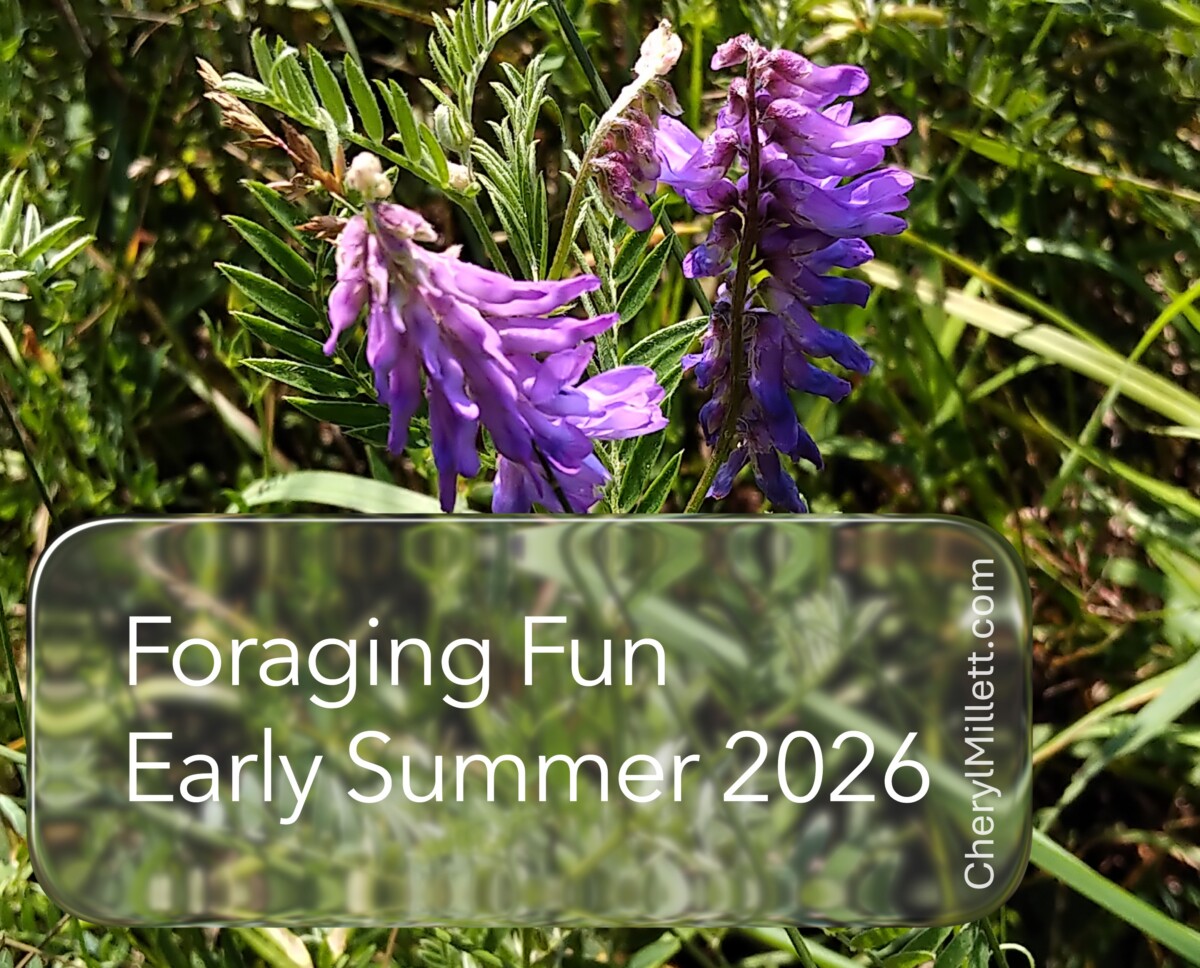
Common vetch wild edible and a part of the pea family.
A favourite moment, was introducing ‘high bush cranberries’ to the gathering. This particular kind of high bush cranberry is the unflavourable tasting one…as in it tastes like stinky socks. It does taste better after a frost and better in the Winter (a storm to be exact). No matter what, the stinky sock taste still lingers in your mouth but it was fun seeing the look on their faces.
Foraging Etiquette
Ethics is important in research and experiments as etiquette is in foraging fun.
When you find a wild edible, like leeks for example, it is good to ask yourself “how many leeks are there in the area?” If several bunches then go ahead and dig some up. You want to make sure there is some left to continue to grow and thrive for the years to come. Leeks is also an example of ‘knowing more when harvesting’.
With leeks, there is a small root at the bottom underneath the edible bulb called a corm (usually cut off before cooking). If you pop off this little root structure, you can poke it right side
up back into the hole. Voila, it will grow back the next year. Also a technique for spreading out the leeks…dig a new hole away from the wild leek bunch. It is good to break up the bunches of wild leeks this way or just plant the whole leek but why not eat the edible portion at the same time?
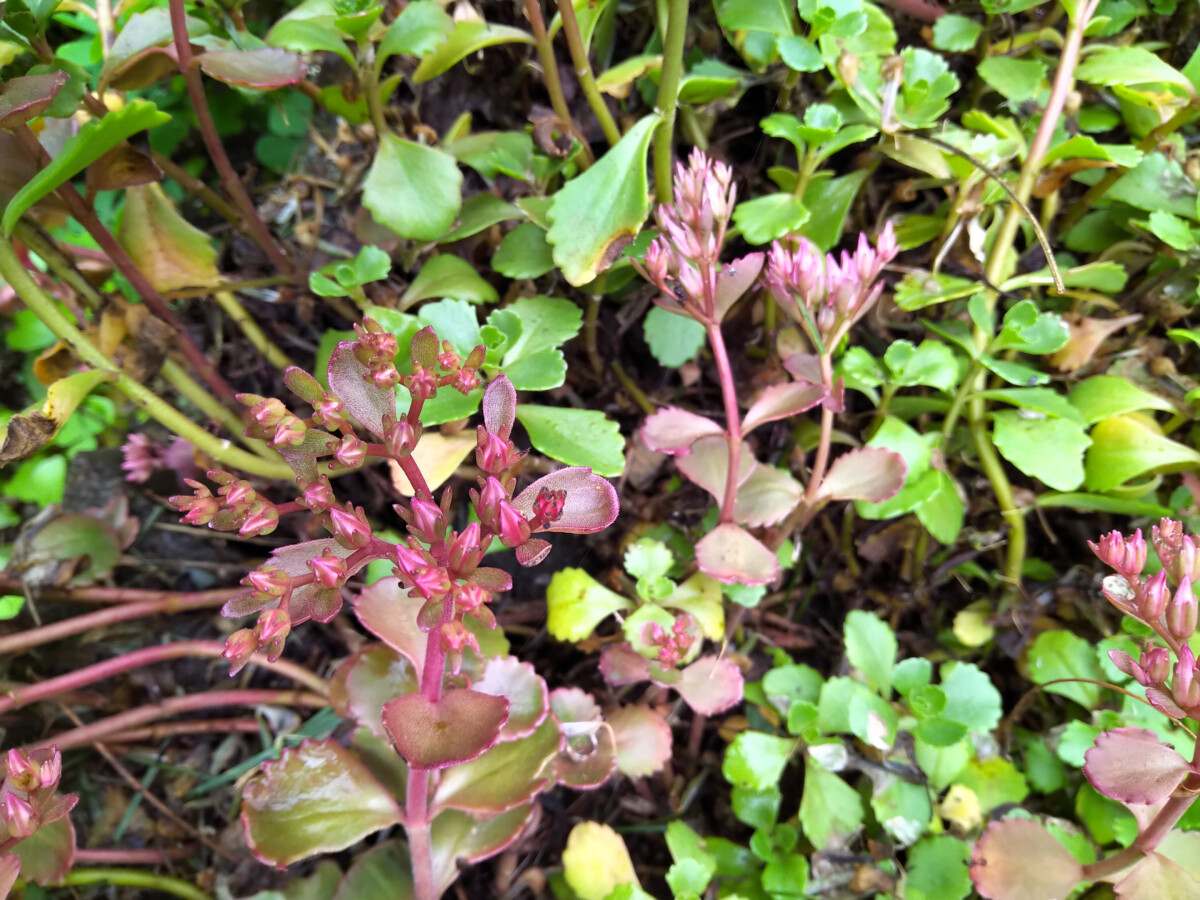
Blood Stonecrop Foraging For Your Better Health
If there are lots, happy picking but best to pick only what you are going to enjoy, which brings me to the nutritional factor..
Nutritive Value
These edible forageables survive all on their own…thank goodness because they reach the depths for nutrients in draught and spread far and wide if given the space (but there are so many edibles for any one plant to take over). If there is plenty, harvest and harvest some more even share (thinking of the garlic mustard plant that was picked and just thrown in piles when it could have been eaten in a salad, stir fry or made into a seasoning – my favourite).
These plants will have nature and natural written all over them and they will each have their own nutritive profile if you care to learn more. Here is the thing…when you are picking some wild edibles, eat some right there…cannot get any fresher. The nutritive value will diminish over time. For example, I eat my salad while removing some of the wild edibles in my veggie garden. Some plants stay put for tomorrow’s meal for teaching ‘Foraging Fun’ classes.
“Soil does not like to be bare so what is your veggie garden growing that you didn’t plant but can be foraged for your better health?”
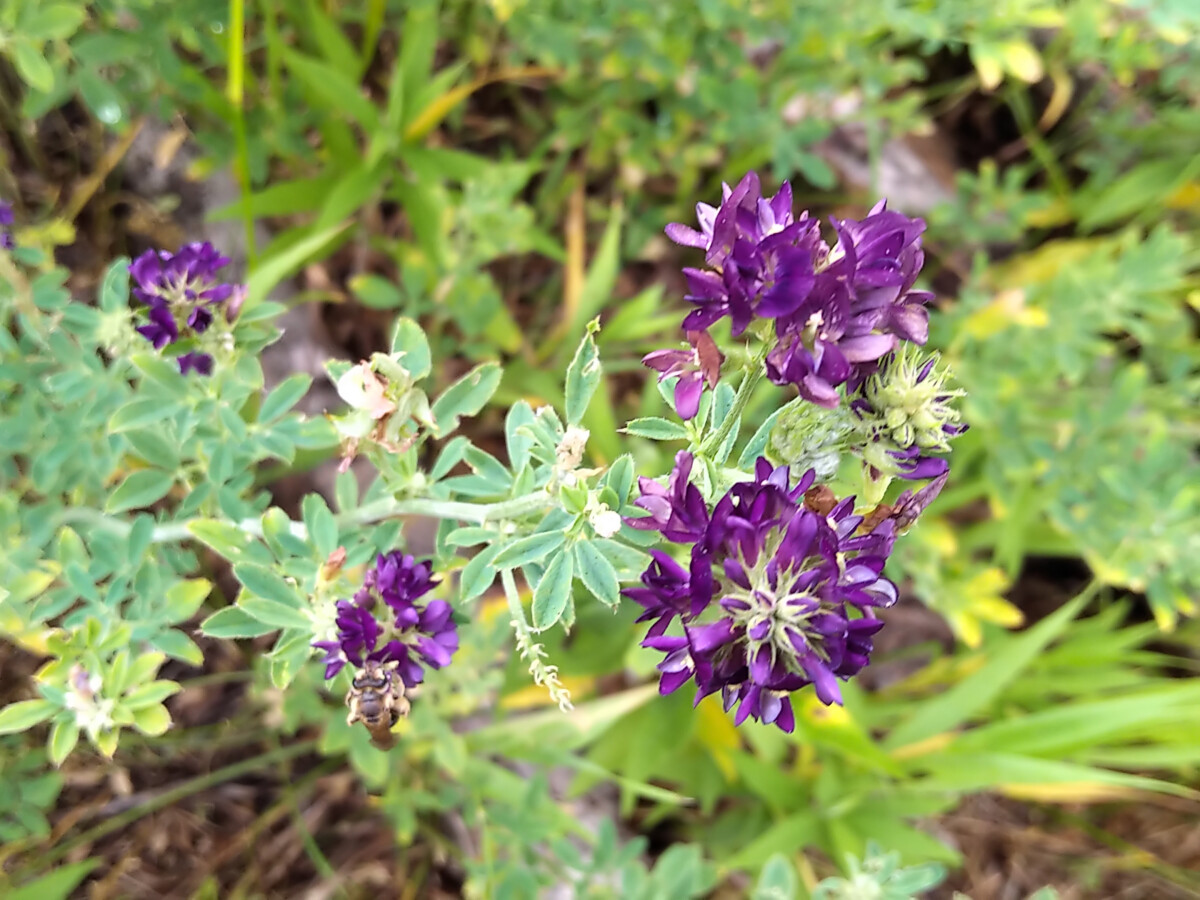
Dark purple alfalfa…best taste of the three different colours of alfalfa.
What’s Next
If foraging is of interest, you have options. Take a class. Read books. Go online. Get an app to identify plants. Or a combo of these. Start with the plants in your garden or nearby. Identify them. I found that a few to a handful of plants was enough to learn at any one time. Once you learn it, you will not forget.
If you are living on Manitoulin Island or find yourself this way, look me up. Perhaps take one of the ‘Foraging Fun’ classes (Manitoulin Acres Learning Space is near Gore Bay).
Happy foraging! For your better health.
Warmly,
Cheryl

Cheryl Millett
Champion for your better health…
Before the age of 20, it never dawned on me that what I chose to put in my mouth would have such a dramatic effect on my well being.
On my path of discovery, I learned that our eating choices directly affected how much energy we have first thing in the morning or that it would build our immune system strength during flu season. Part of it was coming to understand how gentle nutritional cleansing directly helped overcome my health challenges. People keep telling me how beautiful my skin is or how I look younger.
As my studies continued, it became obvious that there is an intrinsic connection between the mind, body, and spirit which directly affects our health and happiness. Omegas are another critical piece of the wellness puzzle. The Auum omegas alone turned on some switches in my brain in just one day.
I have developed a deep appreciation for the wonderful miracle workers our bodies are in the recovery process. Our bodies have natural intelligence. I am passionate to share the connection between nutrition and wellness in my practice and my presentations.
Book All Guts All Glory 2020 on Amazon


Leave A Comment